|
A. Corolla rotate or rotate campanulate, more or less two lipped; stamens 7-10, rarely 5-6.
|
|
|
Section
Rhodora
|
|
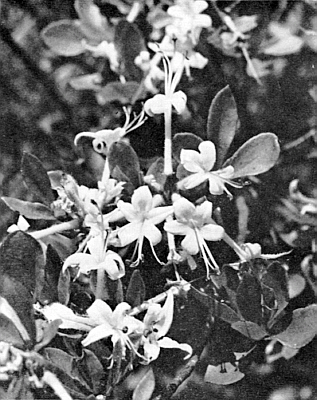
B. Stamens 10, corolla rose-purple, occasionally white; two lipped with two lower lobes divided to the base. Flowers appearing before the leaves. Leaves tomentulose beneath, glaucous. Low bush with ascending branches. This is the most northern species, found in moist woods and swamps extending from Labrador to Newfoundland south through New England, central New York to northeastern Pennsylvania and northern New Jersey.
|
|
R. canadense
(L.) Torrey
|
|
Rhodora
|
|
|
|
|
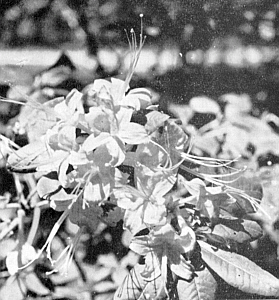
BB. Stamens 5 - 7, corolla with short tube, slightly two lipped, pink or white, spotted. Flowers appearing before the leaves. Leaves glabrous, green beneath. Bush upright with irregular, spreading habit. A plant from the high mountains of western North Carolina, found in ravines and sometimes swamps.
|
|
R. vaseyi
|
|
|
Gray Pinkshell azalea
|
|
|
AA. Corolla funnel-form, sub-regular; tube variable, being longer or shorter than the lobes. Stamens 5.
|
|
|
Section
Pentanthera
|
|
C. Early flowering before or with the leaves (see CC and CCC)
|
|
|
D. Flowers pale to deep pink, rarely white; fragrant.
|
|
|
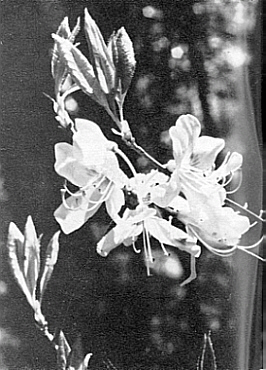
E. Winter bud scales glabrous. Leaves glabrous - glabrescent. Corolla - tube setae eglandular. Plants variably stoloniferous. The pinxterbloom azalea is the northern counterpart of
R. canescens
and occupies a wide territory from the Carolinas and the Atlantic seaboard to Tennessee, Ohio, and Massachusetts.
|
|
R. nudiflorum
(L.) Torrey
|
|
Pinxterbloom azalea
|
|
|
|
|
|
|
|
EE. Winter bud scales pubescent. Plants generally not stoloniferous.
|
|
|
|
|
|
|
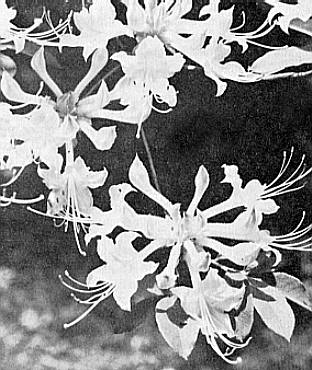
F. Corolla tube, glandular; about as long as the lobes; lobes pointed. Stamens about twice as long as the tube. Leaves with soft pubescence beneath, sometimes with glandular setae. The glandular leaf phase of the roseshell azalea seems to be confined to the mountains of Virginia, but, in more variable form, this species follows the highlands as far west as Missouri via northern Indiana and Ohio to New England and southern Quebec.
|
|
|
R. roseum
(Loisel) Rehder
|
|
|
Roseshell azalea
|
|
|
|
|
|
|
|
FF. Corolla tube glandular, distinctly longer than the lobes. Stamen about thrice as long as the tube. Leaves are usually felty pubescent beneath. Stoloniferous clones frequently occur. The southern Piedmont (pinxter) azalea is widespread from South Carolina and Florida to eastern Texas and Tennessee.
|
|
|
|
|
R. canescens
(Michx.) Sweet
|
|
Piedmont azalea
|
|
|
|
|
DD. Flower white and fragrant (note DDD)
|
|
|
|
|
|
G. Winter buds glabrous. Plants usually stoloniferous.
|
|
|
|
|
|
|
H. Corolla tube, broad, with prominent rows of conspicuous long stipitate glands at apex. Flowers, scented, white or pink flushed, without yellow blotch. Branchlets and leaf undersides usually glabrous, often with glandular setae. Bushes low and very stoloniferous. The coastal azaleas are found in moist woods and pinelands from southeastern Pennsylvania, Delaware to South Carolina.
|
|
|
|
|
|
R. atlanticum
(Ashe) Rehder
|
|
|
|
|
|
Coastal azalea
|
|
|
|
|
|
|
HH. Corolla tube, narrow, glandular without prominent rows stipitate glands at apex. Flowers lemon scented and usually with yellow blotch. Branchlets with glandular setae. Crushed foliage has distinct odor unlike other species. Bushes low, stoloniferous. In 'best' form, the Alabama azalea has a limited distribution, centering in north central Alabama. (Hybrid forms frequently found, bushes tall, less stoloniferous and flowers usually with pink blush.)
|
|
|
|
|
|
R. alabamense
Rehder
|
|
|
Alabama azalea
|
|
|
|
|
|
GG. Winter buds pubescent. Plants somewhat stoloniferous.
|
|
|
|
|
|
|
I. Leaves variably pubescent. Corolla tube thin and sparingly pubescent; flowers rather small. Plant of moist woods from northern Arkansas to eastern Oklahoma and southeast Texas.
|
|
|
R. oblongifolium
(Small) Millais
|
|
|
Texas azalea
|
|
|
|
|
|
|
|
II. Leaves glabrous; except for abundant eglandular setae. Corolla tubes soft (villous) pubescent, glandular and thin. Winter buds densely gray-pubescent. Flowers many in a cluster and small. Assigned to
R. visco
sum by Rehder, this little plant of the drier woods of Georgia and Alabama is earlier flowering than
R. viscosum
and seems more akin to
R. oblongifolium
.
|
|
|
|
|
|
R. viscosum
(L.) Torr. var. aemulans-Rehder
|
|
|
|
|
DDD. Flowers yellow to red. Plants not stoloniferous.
|
|
|
|
|
|
|
J. Winter buds pubescent, flowers yellow and fragrant. Leaves soft pubescent beneath, and leaves and branches often with glandular setae. Corolla tube glandular, usually reddish. The Florida azalea occupies a restricted southern range from northwestern Florida to southeastern Mississippi.
|
|
|
|
R. austrinum
(Small) Rehder
|
|
|
|
Florida azalea
|
|
|
|
JJ. Winter buds glabrous, flowers yellow to red, not fragrant.
|
|
|
|
|
|
|
|
|
|
K. Corolla tube usually pubescent with glandular setae, about as long or shorter than lobes. Flower width variable, but averaging about 48mm. across wing petals; color clear yellow to orange and red. Branchlets and leaves variably pubescent. This is the large flower phase of the tetraploid flame azalea, which blooms in early May and occurs at lower elevations of the mountains from north Georgia to Virginia and perhaps to Pennsylvania and Ohio.
|
|
R. calendulaceum
(Michx.) Torrey
|
|
Flame azalea
|
|
|
|
|
|
|
|
|
KK. Corolla tube finely pubescent and eglandular; slender tube longer than the lobes. Flower width variable, but average about 40 mm. across wing petals; color apricot yellow to orange-red and red. Leaves glabrescent to glabrous. The Oconee azalea follows a relatively narrow band across central Georgia and down the Savannah River.
|
|
|
|
R. speciosum
(Willd.) Sweet (R. flammeum (Michx.)
|
|
(Sarg.) Oconee azalea
|
|
|
|
CC. Mid-season flowering, with or after leaves, but before winter buds are formed. (see CCC.)
|
|
|
|
|
|
L. Flowers white to pink blush and fragrant.
|
|
|
|
|
|
|
M. Branchlets glabrous and smooth. Winter buds glabrous. Corolla tube sparingly glandular outside, usually pubescent inside. Style purplish red, usually glabrous. Leaves glabrous, occasionally eglandular setae. Bush non-stoloniferous. The sweet azalea is a plant of upland stream sides from New York and Pennsylvania to central Georgia and Alabama.
|
|
|
|
|
|
R. arborescens
(Pursh.) Torrey
|
|
Sweet azaleas
|
|
|
|
|
|
|
MM. Branchlets and leaves pubescent with bristle-like setae. Winter buds glabrous to pubescent, depending upon variety. Corolla tube thin and glandular. Style not colored and usually pubescent. Plant is variably stoloniferous; also variable as to habit, leaf size, flower size and time of bloom, which sometimes occurs well into July. This moisture-loving species is widespread from Maine to South Carolina, Tennessee and Georgia.
|
|
|
|
|
|
R. viscosum
Torrey
|
|
Swamp azalea
|
|
|
|
|
|
LL. Flowers yellow to red; non-fragrant.
|
|
|
|
|
|
|
N. Bushes non-stoloniferous, upright habit of growth. Corolla tube, usually pubescent with glandular setae, about as long or shorter than lobes. Winter buds glabrous. Flower width variable, but averaging about 46 mm. across wing petals. The earlier description of
R. calendulaceum
applies in most respects, but the flowers are somewhat smaller and the blooming season later, from late May to mid-June. This is the high altitude, late phase flame azalea of the southern Appalachians (Wayah Bald; Soco Gap, etc.) to Virginia.
|
|
|
|
|
|
R. calendulaceum
(Michx.) Torrey
|
|
Flame azalea
|
|
|
|
|
|
|
NN. Bushes variably stoloniferous, sometimes vigorously so. Plants low and twiggy. Similar to
R. calendulaceum
with respect to pubescence of vegetative and floral parts, flower color, etc., but corolla tubes are thinner and flowers somewhat smaller, averaging about 42 mm. across wing petals. The diploid Cumberland azalea flowers in June and early July on the mountains of eastern Kentucky to Tennessee, western North Carolina, north Georgia, and Alabama.
|
|
|
|
|
R. bakeri
(Lemon & McKay) Hume
|
|
Cumberland (Camp's Red) azalea
|
|
|
|
CCC. Late flowering, appearing after the winter buds are at least partly formed.
|
|
|
|
O. Flowers white, fragrant.
|
|
|
|
|
|
|
P. Branches densely strigose. Winter buds with more than 15 aristate mucronate scales, usually pale with conspicuous dark margin. Leaves often pubescent beneath, serrulate, ciliate margin. Corolla tube slenderly cylindric nearly to summit; about twice the length of lobes; tubes copiously glandular - pilose and sparingly villous outside. Style glabrous or minutely pubescent only at base and usually not colored. Bushes tall, infrequently similar to those of
R. viscosum
, including the variability of winter bud pubescence, but its leaves may be slightly larger than average for
R. viscosum
and individuals may flower in late October. A close ally of
R. viscosum
, the hammock-sweet azalea occupies a disjunct area of distribution of the southern coastal plains from east central Georgia, central Florida to Louisiana.
|
|
|
|
|
|
R. serrulatum
(Small) Millais
|
|
|
|
|
|
Hammock-sweet azalea
|
|
|
|
|
|
|
PP. Branches glabrous and smooth. Winter buds glabrous and light brown. Corolla tube sparingly glandular outside, usually pubescent inside. Style purplish red, usually glabrous. Leaves glabrous, occasionally with eglandular setae. Late flowering phase of sweet azalea; found in Georgia.
|
|
|
|
|
|
R. arborescens
(Pursh.) Torrey
|
|
|
|
|
|
Sweet azaleas
|
|
|
|
OO. Flowers yellow to red, non-fragrant; winter buds glabrous.
|
|
|
|
|
|
|
Q. Branches with stiff bristles. Bushes variably stoloniferous, sometimes vigorously so, plants low and twiggy. See previous description. Scattered individuals of southern Appalachians have been observed in flower in August and September.
|
|
|
|
|
|
R. bakeri
(Lemon & McKay) Hume
|
|
|
|
|
|
Cumberland (Camp's Red) azalea
|
|
|
|
|
|
|
QQ. Branches glabrous and smooth. Bushes tall, round topped, non-stoloniferous. Winter buds glabrous. Leaves generally glabrous with eglandular setae on veins. Flowers generally apricot yellow to red with predominance of red-orange and red. The distinctive plumleaf azalea is restricted to the ravines of a small part of southwestern Georgia and adjacent Alabama, generally centering around Ft. Gaines, Georgia. It shows closest affinity to
R. bakeri
.
|
|
|
R. prunifolium
(Small) Millais
|
|
|
Plumleaf (Prunifolia) azalea
|
|